There’s a misconception that prompt engineering is about finding magic words that unlock hidden AI capabilities. Like there’s some secret syntax that, if you just knew it, would make ChatGPT suddenly produce perfect output.
That’s not how it works.
I’ve been deep in this space for a while now. I’ve written two books on the subject and use these systems daily across my own businesses. And the thing I keep coming back to is that prompt engineering is closer to project management than to coding. It’s about clearly defining what you want, providing the right context, setting proper constraints, and iterating on the output. The skills that make someone a good prompt engineer are the same skills that make someone a good communicator: clarity, specificity, and knowing your audience.
Here’s what I mean.
The Real Skill Is Decomposition
The single most valuable prompt engineering technique isn’t a template or a framework; it’s the ability to break a complex task into smaller, well-defined steps.
Consider this scenario: you need to create a quarterly business review presentation. A beginner writes one prompt: “Create a QBR presentation for my SaaS company.” They get a generic 10-slide deck that impresses no one.
An experienced prompt engineer breaks down the task:
- “Analyze these metrics and identify the 3 most important trends” (data analysis)
- “For each trend, explain the business impact in 2 sentences a VP would care about” (translation)
- “Draft slide titles and key points for a 15-minute presentation” (structure)
- “Write speaker notes that anticipate the CFO’s likely questions” (audience awareness)
Same task. Dramatically different output.
Context Is Not Optional
Here’s a prompt that looks reasonable on the surface:
“Write a marketing email for our new feature.”
Here’s what’s missing: Who is the audience? What’s the feature? What action do you want the reader to take? What tone does your brand use? What’s the subject line constraint? Is this a standalone email or part of a sequence? What have you already tried that didn’t work?
Every piece of omitted context is a place where the AI will fill in the blank with a generic assumption. Those assumptions are why AI output so commonly feels like it was written by someone who doesn’t know your business, because it wasn’t given the chance to.
The fix isn’t complicated. Before writing a prompt, spend 60 seconds answering: Who is this for? What do I need? What does success look like? Then put those answers in the prompt.
Frameworks Beat Freestyling
Most people reinvent the wheel every time they open ChatGPT. They start from scratch, write whatever comes to mind, and hope for the best.
Professionals use frameworks. Not because creativity is bad, but because frameworks handle the structural elements so your creativity can focus on what actually matters.
One of the frameworks I use constantly (and that I built the CRAFT system around in my first book):
- Role: “You are a [specific expert]”
- Context: “Here’s the situation: [background]”
- Task: “I need you to [specific deliverable]”
- Format: “Format it as [table/bullets/narrative]”
- Constraints: “Keep it under [length]. Focus on [priority]. Avoid [common mistake].”
This takes 30 seconds to fill in and consistently produces output that’s 3–5x better than an unstructured prompt. Not because the framework is magic, but because it forces you to think about what you actually need before you ask for it.
The Business Application Gap
Most prompt engineering content is written for developers and hobbyists. “Make AI write a poem.” “Generate code for a to-do app.” “Create an image of a chimpanzee riding a whale.”
That’s fine for learning, but it misses where AI creates the most value: routine business tasks that eat up professional time.
Drafting RFP responses. Analyzing customer feedback themes. Creating SOPs from tribal knowledge. Translating technical specs into sales collateral. Building decision frameworks from messy data. Writing performance reviews that are actually specific and useful.
These aren’t glamorous applications, but they’re where a skillfully crafted prompt saves hours, not minutes. And they’re where most professionals are still using AI at maybe 10% of its power, because nobody taught them the structural thinking that makes the difference.
This gap is exactly why I wrote my second book. I kept seeing the same pattern — smart professionals who knew what they wanted AI to do but didn’t have a systematic approach to getting there.
Where to Go From Here
If you’re using AI for professional work and want to move beyond trial-and-error prompting, the key is building a personal library of proven patterns. Start with 5–10 templates that cover your most common tasks, tweak them based on what actually works, and build from there.
If you want a head start, I put both of my books together for exactly this purpose:
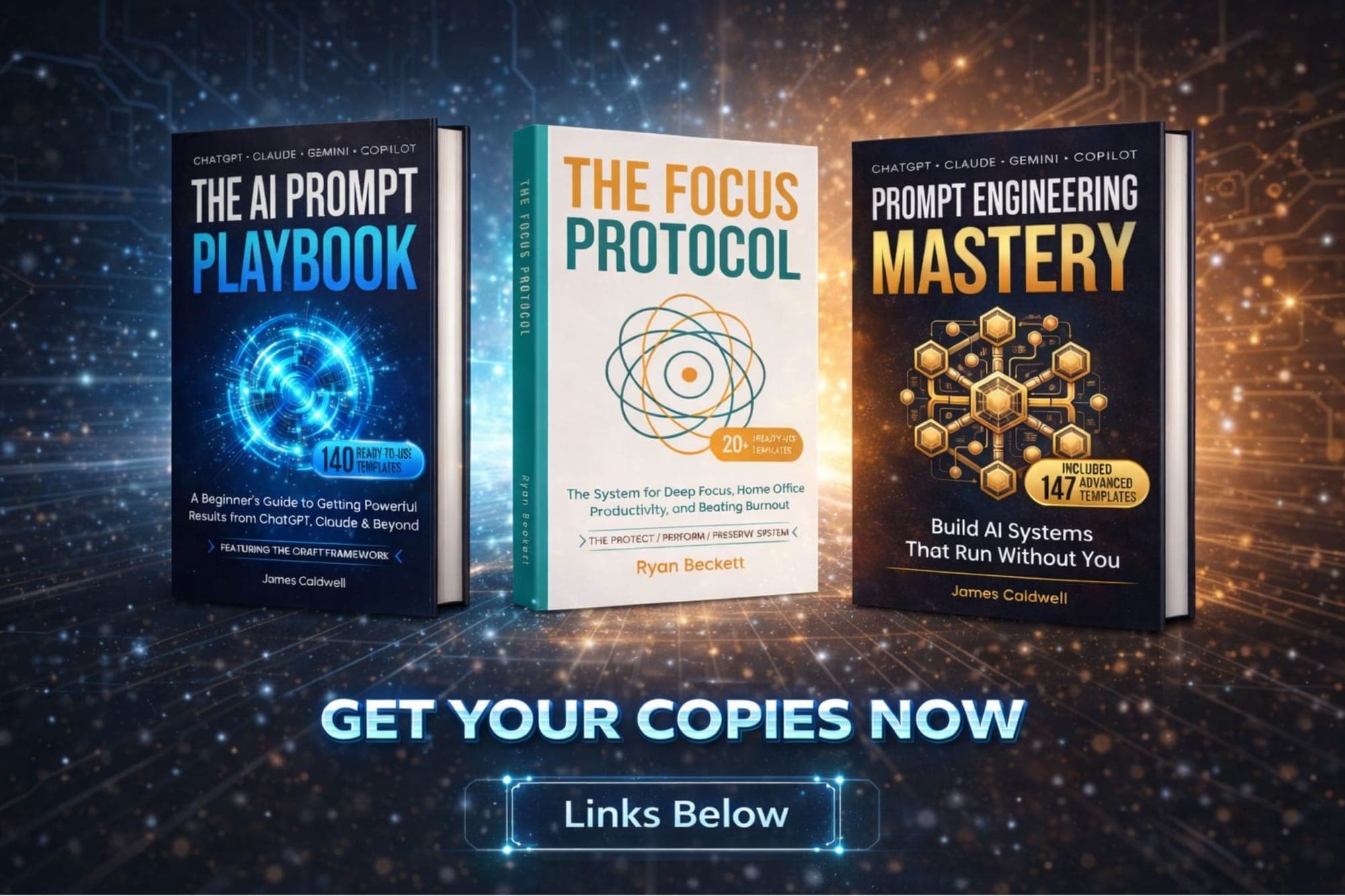
The AI Prompt Playbook — 140 ready-to-use templates built around the CRAFT framework. This is the starting point if you’re looking for a well-organized approach across all skill levels. It covers everything from content generation to data analysis to strategic planning.
Prompt Engineering Mastery — 147 templates built around the FORGED system, specifically designed for business applications. This picks up where most prompt engineering guides stop and goes deep on the professional use cases that actually move the needle.
If you’ve been following my publishing journey (I posted about it here), you know these came from real experience, not theory. Every template in both books is something I’ve tested and refined across my own work.
Follow me (Crafty) on X 👉🏼 x.com/9bitCrafty